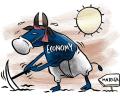
However, demand was still much higher compared to the previous years, underlining the scheme's vital role in providing employment to the rural poor, a vast majority of whom are migrants.
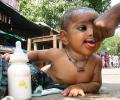
The demand for milk and milk products slumped during the Covid-19 lockdown mainly from hotels, restaurants, sweetmeat shops which were shut to control the spread of the disease.

Between June 1 and July 28, about 32 per cent of the 685 districts in the country did not receive adequate rainfall.

Court orders probe into Union minister Gajendra Singh Shekhawat's role in a complaint linked to Sanjivani Credit Cooperative Society, in which thousands of investors allegedly lost Rs 900 crore a year ago.
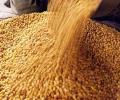
Distributing chana is easier than other varieties of pulses as it only requires cleaning and sorting and can be consumed whole; it was also abundantly available with Nafed.
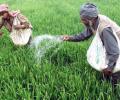
Kerala, Punjab, Telangana and Andhra Pradesh are among the major agriculturally important states that have banned the use of glyphosate citing its adverse impact on human health.

The plan involves the Rajya Sabha and Lok Sabha seating half of their members in their respective chambers, reports Archis Mohan.
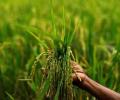
Data from department of agriculture showed that kharif crops had been sown in around 31.56 million hectares till Friday, which was 104.25 per cent more than the same period last year. Acreage of almost all crops was higher than last year.

Experts say while the increasing demand for a ban on Chinese goods might make for good optics, the reality is that India is still heavily dependent on that country in a wide range of industries like electronics, mobile devices, auto, pharma, telecom equipment, and fertilisers.
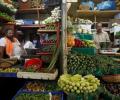
Since March 2020, WPI food inflation rate continued to fall but the CPI-food inflation rose, signaling a breakdown in supply chain from the mandis to the final household.

The firm, headed by Sunil Kumar Gupta, was appointed auditors of the PM's National Relief Fund in 2019, reports Archis Mohan
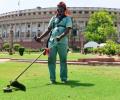
Officials have said the national capital lacked a convention centre big enough to seat so many MPs and adhere to social distancing norms. Additionally, holding a 'virtual session' looks slims as any change in the rules requires a motion to be carried in both the Houses of Parliament.

Till date, MP has procured around 12.77 million tonnes of wheat, which is expected to reach 13 million tonnes by the time the process ends in the next few weeks.
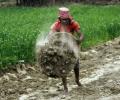
Kiran Vissa, co-convenor of National Alliance for Sustainable Agriculture, said that amendments to the EC Act have nothing to do with farmers' welfare but instead meant to please big players and agriculture companies. This is because small and marginal farmers don't have the storage capacity to attract provisions of the EC Act.
As the growth figures relate to pre-Covid lockdown period it does not reflect the real picture of distress which unfolded from April onwards in the sector, when acute supply disruption led to sharp drop in prices of many commodities largely perishables impacting farmers.

The locusts initially entered Rajasthan from Pakistan and from there the swarms moved towards Madhya Pradesh, Haryana, and Punjab over the last few weeks and are now threatening to enter Uttar Pradesh, putting at risk the summer crop.

'I'm not surprised with what's happening in India,' 'Tiger' Tyagarajan tells Nivedita Mookerji.

'The spirit of cooperation between the Centre and states has been diluted in many ways.' 'The level of consultation which used to be there earlier has reduced significantly.'

The government was going in the "wrong direction" and it was "highly condemnable" that it did not discuss the proposed changes with trade unions and other stakeholders, says BMS, trade union arm of the RSS.

The government is looking at tweaking provisions of the Indian Contracts Act of 1872 to bring agreements between farmers and companies under its ambit, aiming to prevent exploitation of farm people.
 © 2026 Rediff.com - Advertise with us - Disclaimer - Privacy Policy - Sitemap - Feedback - About us - Terms of use - Grievances